
There’s a particular kind of quiet that falls over you the first time you stand beneath the ramparts of a Jaipur fort, watching the sandstone turn gold as the sun drops behind the Aravalli hills. Jaipur doesn’t just show you history – it makes you walk through it, sit inside it, and occasionally get a little lost in it. That’s exactly why, at Jaipur Tour Planner, we spend more time talking about monuments than almost anything else when a guest calls to plan their trip.
Whether you’re booking a Jaipur One Day Tour Package on a tight schedule or settling in for a longer holiday, the Pink City’s forts and palaces are non-negotiable stops. This guide walks you through the monuments we think matter most, along with the timings, entry fees, and small details that make the difference between a rushed visit and a memorable one.
Why Jaipur’s Monuments Deserve More Than a Rushed Visit
Founded in 1727 by Maharaja Sawai Jai Singh II, Jaipur was India’s first planned city, laid out on a grid with wide avenues and rose-pink facades that still colour the old town today. Every fort and palace here carries a story – of Rajput courage, Mughal craftsmanship, or the quiet resilience of a kingdom that outlasted empires. Travellers who book a Jaipur Sightseeing Tour with us often tell us afterwards that the monuments were the part of the trip they think about most.
1. Amer Fort – The Crown Jewel of Jaipur
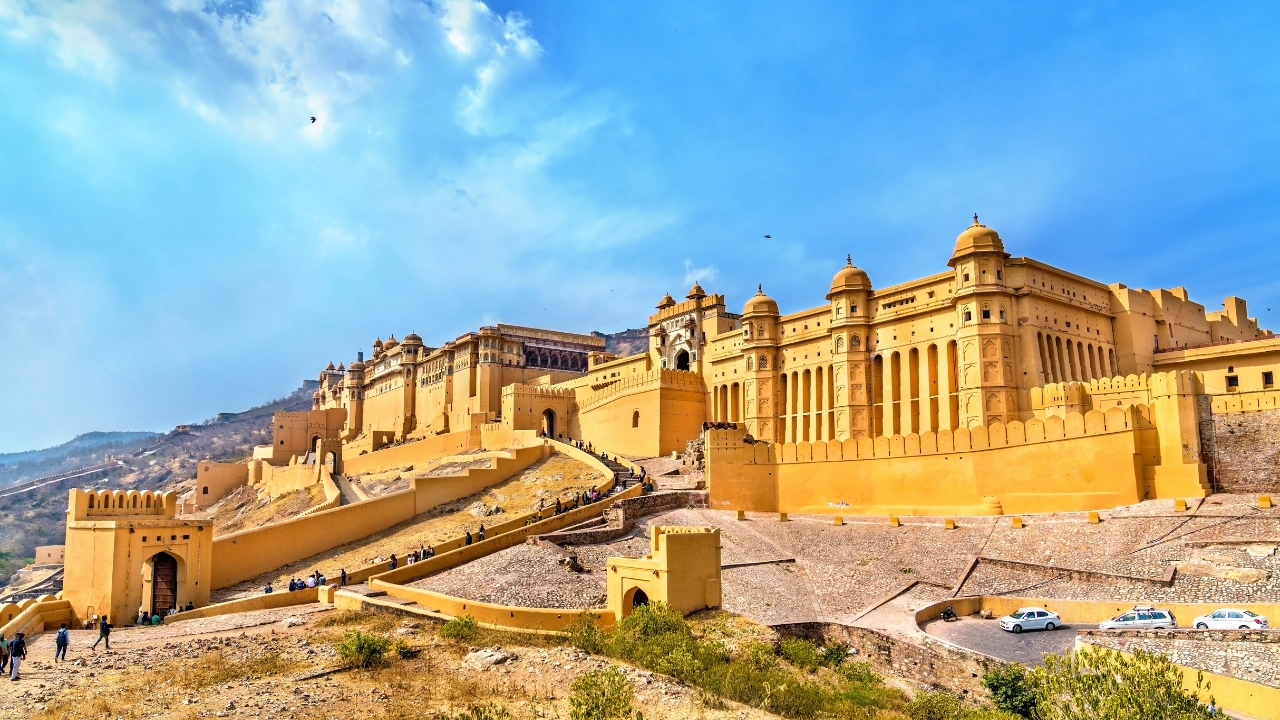
Perched on a ridge above Maota Lake around 11 km from the city centre, Amer Fort was built in 1592 by Raja Man Singh I and remains the single most visited monument in the region. Walk through its courtyards and you’ll find Rajput strength blended with Mughal elegance at every turn.
Highlights
- Sheesh Mahal (Mirror Palace) – thousands of tiny mirror fragments that glitter with even a single flame
- Diwan-e-Aam and Diwan-e-Khas – the halls once used for public and private royal audiences
- Ganesh Pol – an intricately painted gateway leading into the royal apartments
- Evening Light and Sound Show narrating the fort’s history against a dramatic backdrop
Timings & Entry Fee
- Open 8:00 AM to 5:30 PM daily
- Entry: approx. ₹100 for Indian nationals, ₹500 for foreign visitors
- Optional elephant ride to the entrance: approx. ₹1,100
Tip: Arrive right at opening time – the light is softer, the courtyards are near empty, and the heat hasn’t set in yet.
2. Hawa Mahal – The Palace of Winds
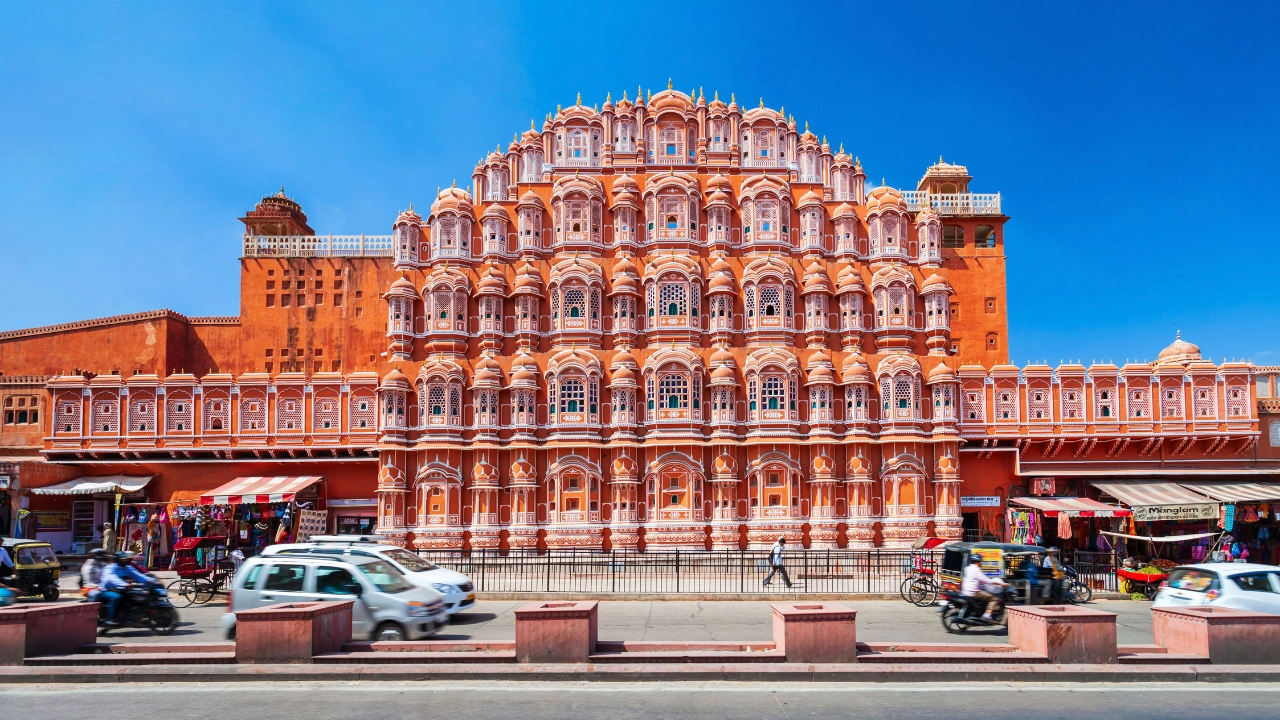
No image represents Jaipur quite like the honeycombed façade of Hawa Mahal, built in 1799 by Maharaja Sawai Pratap Singh. Its 953 small latticed windows were designed so royal women could observe street life below without ever being seen themselves.
Highlights
- Five-storey pink and red sandstone façade shaped like a honeycomb
- Clever natural ventilation that kept the palace cool through Rajasthan’s summers
- Spectacular golden glow at sunrise, best captured from across the street
Timings & Entry Fee
- Open 9:00 AM to 4:30 PM daily
- Entry: approx. ₹50 for Indian nationals, ₹200 for foreign visitors
Tip: Head to the Wind View Café directly opposite for the postcard-perfect photograph, coffee in hand.
3. City Palace – Where Jaipur’s Royals Still Live
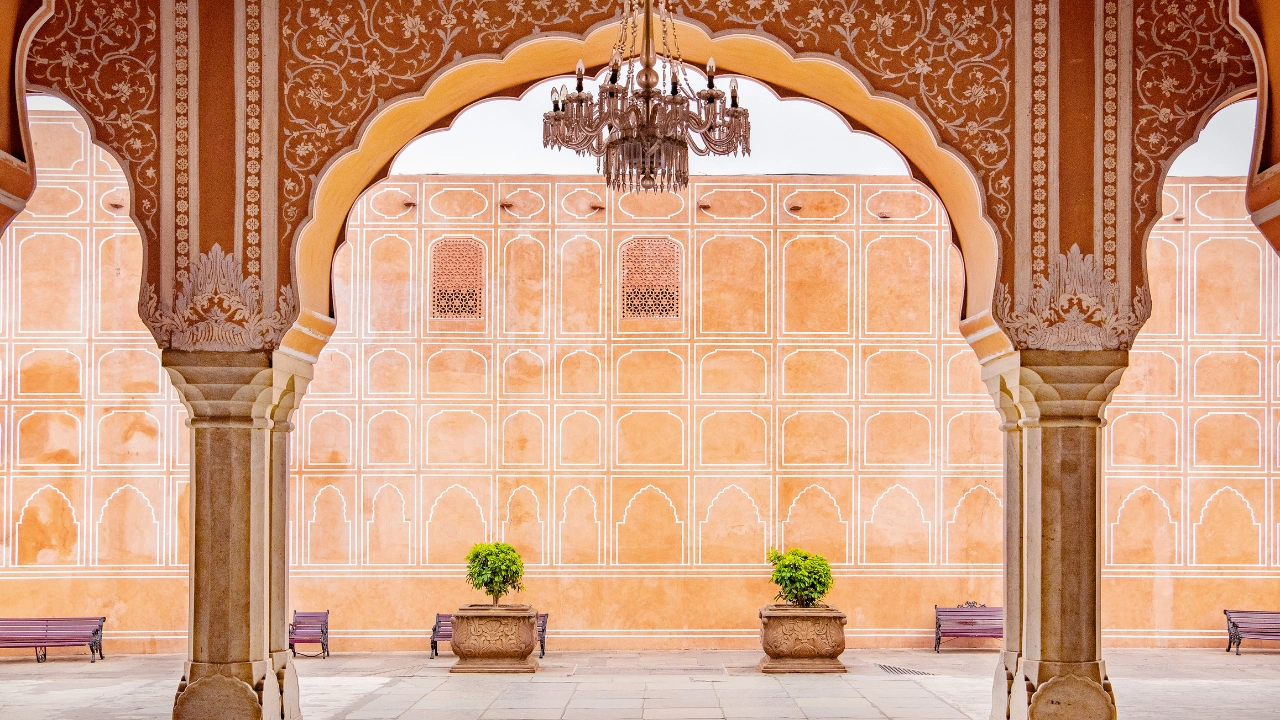
Set right in the heart of the old city, the City Palace complex is part museum and part living residence – a section of it is still home to the erstwhile royal family. Construction began under Maharaja Sawai Jai Singh II and the buildings blend Rajput, Mughal and even European touches.
Highlights
- Chandra Mahal – still partly occupied by descendants of Jaipur’s royal family
- Mubarak Mahal – a textile museum showcasing royal garments and fabrics
- Pritam Niwas Chowk – four ornate gates, each representing a different season
- An optional Royal Tour granting access to private, rarely-seen sections of the palace
Timings & Entry Fee
- Open 9:30 AM to 5:00 PM daily
- Entry: approx. ₹200 for Indian nationals, ₹700 for foreign visitors; Royal Tour approx. ₹3,000
Tip: A local guide adds real depth here – so much of the palace’s story isn’t written on any plaque.
4. Jantar Mantar – A Royal Observatory Frozen in Stone
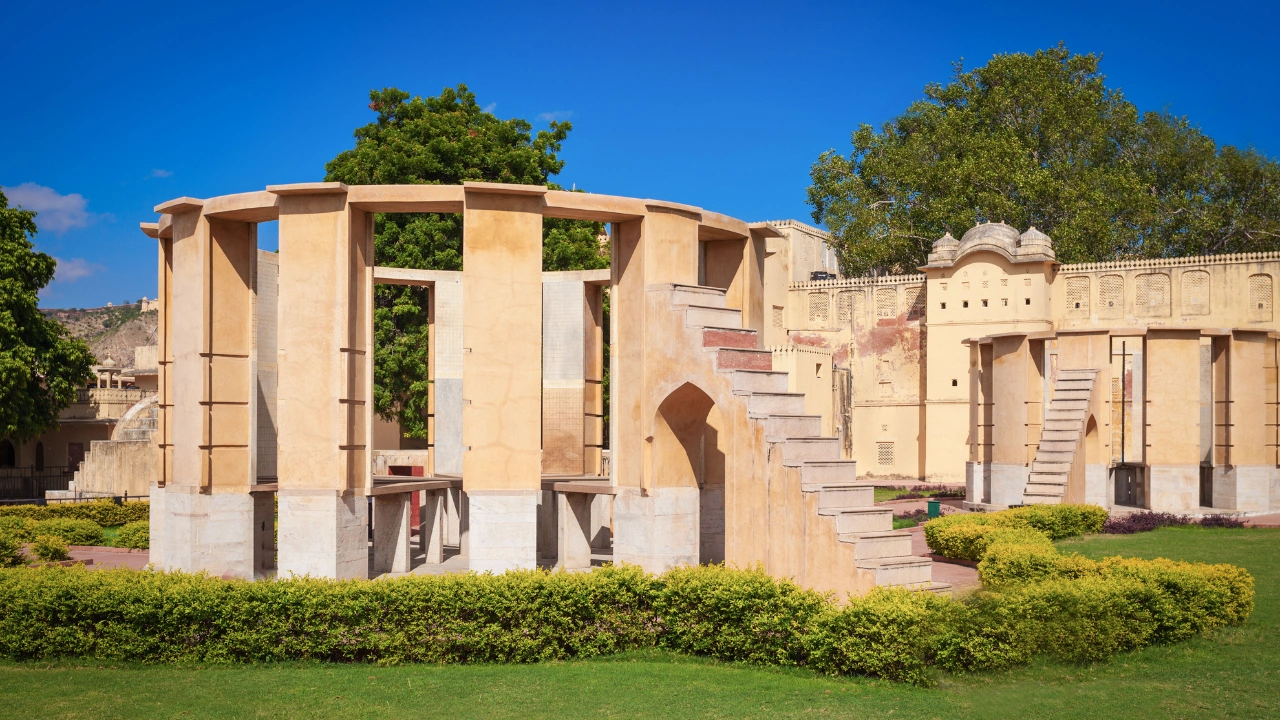
A UNESCO World Heritage Site, Jantar Mantar was commissioned in 1734 by Maharaja Sawai Jai Singh II, an astronomy enthusiast as much as a ruler. Nineteen giant stone instruments here were built to track time, chart the stars and predict eclipses with astonishing precision for their era.
Highlights
- Samrat Yantra – the world’s largest stone sundial, still accurate to within a couple of seconds
- A fascinating stop for anyone with even a passing interest in astronomy or engineering
Timings & Entry Fee
- Open 9:00 AM to 4:30 PM daily
- Entry: approx. ₹50 for Indian nationals, ₹200 for foreign visitors
5. Nahargarh Fort – Jaipur’s Favourite Sunset Point
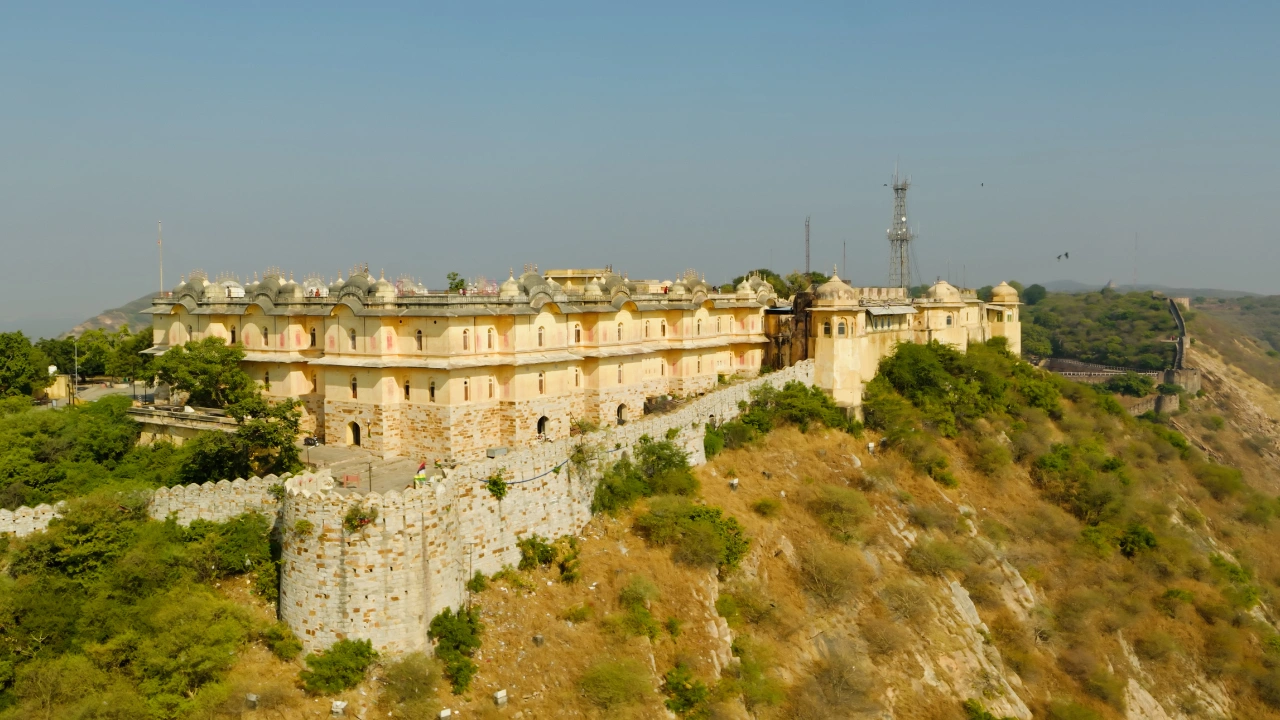
Built in 1734 as a retreat and defensive outpost, Nahargarh Fort sits high above the city and offers what is, without much debate, the best sunset view in Jaipur.
Highlights
- Madhavendra Bhawan – a palace with mirrored, identical suites built for the king’s queens
- Sweeping views over Jaipur as the city lights begin to glow
- Rooftop cafés and restaurants that make for a relaxed evening stop
Timings & Entry Fee
- Open 10:00 AM to 5:30 PM daily
- Entry: approx. ₹50 for Indian nationals, ₹200 for foreign visitors
Tip: Time your visit for late afternoon and stay through sunset – it’s worth the wait.
6. Jaigarh Fort – The Fortress That Guarded a Kingdom
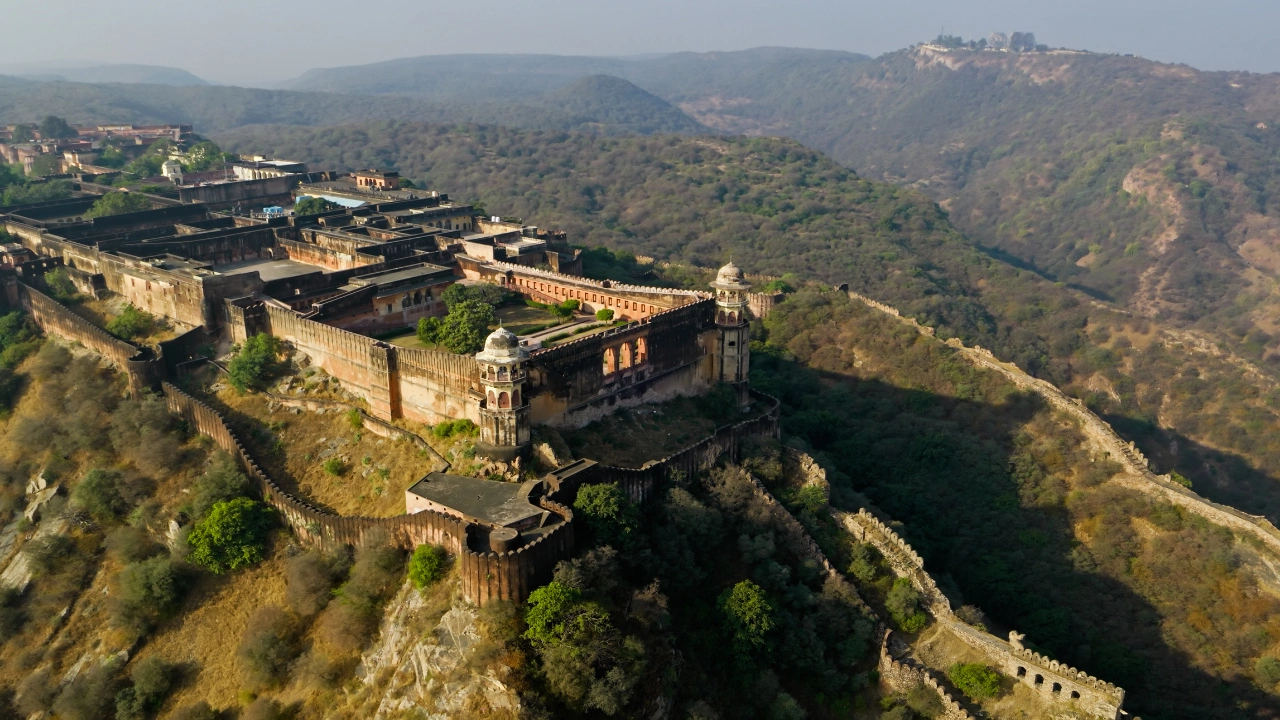
Standing on the Hill of Eagles above Amer, Jaigarh Fort was built in 1726 chiefly for military use and earned the nickname the ‘Victory Fort.’ It’s connected to Amer Fort by underground passages once used for safe royal movement during times of conflict.
Highlights
- Home to the Jaivana Cannon – the largest wheeled cannon ever built
- Long fortified walls and watchtowers with panoramic views over the city
- Hidden tunnels linking the fort to Amer
Timings & Entry Fee
- Open 9:30 AM to 5:00 PM daily
- Entry: approx. ₹70 for Indian nationals, ₹200 for foreign visitors
7. Albert Hall Museum – Rajasthan’s Oldest Museum
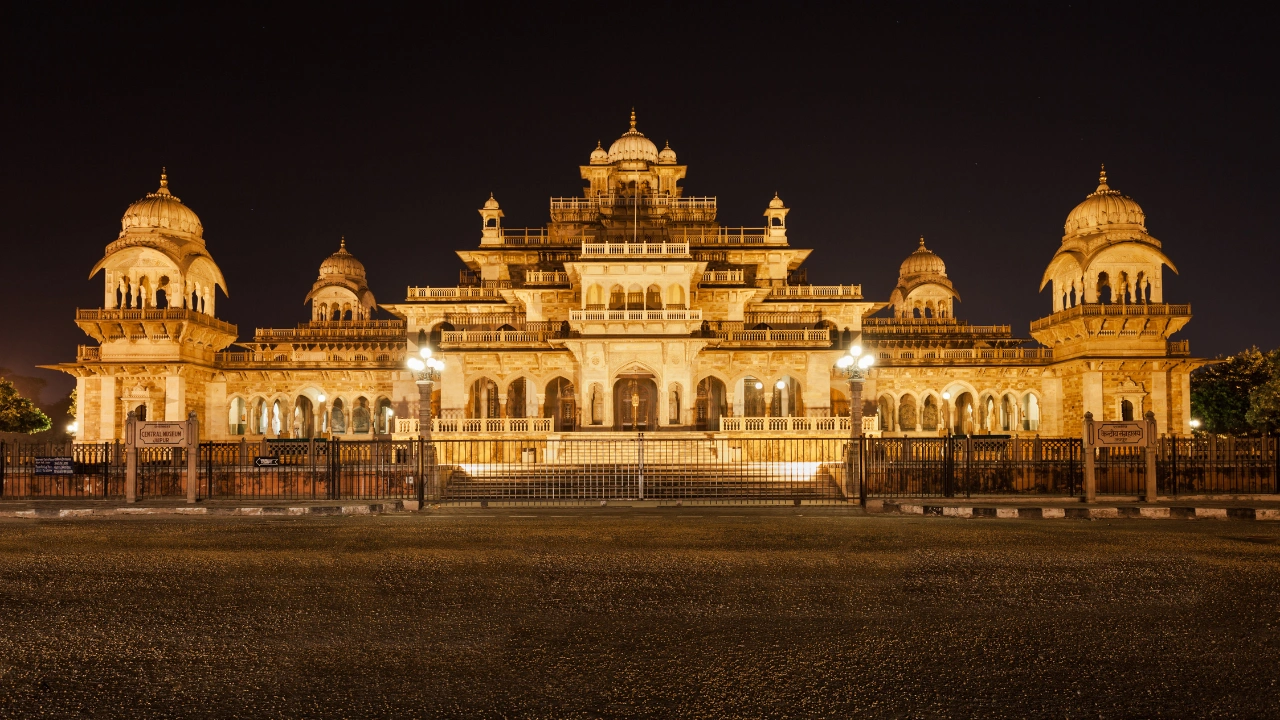
Completed in 1887, Albert Hall is a striking example of Indo-Saracenic architecture and holds the title of Rajasthan’s oldest museum. By day it’s a treasure trove of history; by night, lit up against the sky, it looks almost like a palace of its own.
Highlights
- An Egyptian mummy, rare coins, miniature paintings and antique weaponry
- Striking evening illumination that makes it a lovely stop after dark
Timings & Entry Fee
- Open 9:00 AM to 5:00 PM daily
- Entry: approx. ₹40 for Indian nationals, ₹300 for foreign visitors
A Suggested Itinerary for Seeing Jaipur’s Monuments
If you’re wondering how to fit all this into your schedule, here’s how we typically structure it for guests booking a Jaipur Full Day Tour or a multi-day stay:
- Day 1: Amer Fort, Jaigarh Fort and Nahargarh Fort (best done in that order, ending with sunset)
- Day 2: Hawa Mahal, City Palace and Jantar Mantar (all within walking distance of one another)
- Day 3: Albert Hall Museum, followed by shopping in Johari Bazaar and Bapu Bazaar
For visitors short on time, our Jaipur One Day Tour Package by Car condenses the essentials – Amer Fort, Hawa Mahal, City Palace and Jantar Mantar – into a single, well-paced day with a private vehicle and driver, so you’re never stuck waiting for transport between stops.
How Jaipur Tour Planner Makes It Easier
We won’t pretend every travel company in the city offers the same experience, because they don’t. What we can tell you is how we work: as one of the Best Travel Agencies in Jaipur, we build every Jaipur Travel Package around how much time you actually have, not a fixed template. Rushing through seven monuments in a day sounds efficient on paper, but it rarely makes for a good trip – so we help you prioritise based on what genuinely interests you.
Our Car Rental Services in Jaipur mean you’re never dependent on shared transport or haggling with local drivers – your car and driver are booked, insured, and familiar with the fastest routes between monuments, bazaars and your hotel. Combine that with our knowledgeable local guides, and you’ll notice the difference from the very first stop.
Being counted among the Best Tour Operators in Jaipur isn’t something we take lightly. Whether you’re after a compact Jaipur Sightseeing Tour Package or a broader Rajasthan itinerary built around our Jaipur Holiday Packages, our focus stays the same: fewer logistics for you to worry about, and more time actually standing inside the history you came to see.
Final Thoughts
Jaipur’s monuments aren’t just backdrops for photographs – they’re chapters of a story that’s still being told, in the bazaars, the food, and the everyday rhythm of the Pink City. Whether you have one day or five, there’s a way to experience it properly.
If you’re ready to explore Jaipur’s forts and palaces without the stress of planning logistics, get in touch with Jaipur Tour Planner and let’s put together the right Jaipur Tour Packages for your trip.
Frequently Asked Questions
1. Which is the best monument to visit first in Jaipur?
Most first-time visitors start with Amer Fort, since it’s the grandest and needs the most time. Visiting early morning also helps you avoid both the crowds and the midday heat.
2. Is there a combined ticket for Jaipur’s monuments?
Yes, a composite ticket is available covering Amer Fort, Hawa Mahal, Jantar Mantar and Albert Hall Museum, which works out cheaper than buying tickets separately.
3. Can Jaipur Tour Planner arrange a guide along with the car?
Absolutely. Every Jaipur Sightseeing Tour we arrange can include a government-approved local guide alongside your car and driver, so you get both comfort and context.
4. How many days are ideal to cover Jaipur’s main monuments?
Two to three days lets you see everything without rushing. If you’re on a tighter schedule, our Jaipur One Day Tour Package by Car is built to cover the highlights efficiently.
5. Is Jaipur suitable for a one-day trip from Delhi or Agra?
It is, and it’s a popular option. With an early start and a private car, you can comfortably cover Amer Fort, Hawa Mahal and City Palace before heading back the same evening.
6. Which monument offers the best sunset view in Jaipur?
Nahargarh Fort is the clear favourite, with sweeping views over the entire city as the sky turns orange and gold.
7. Do the monuments in Jaipur get crowded?
Amer Fort and Hawa Mahal can get busy, especially late morning and around weekends. Visiting early or booking a private tour through us usually means a smoother, less crowded experience.
8. What’s included in a typical Jaipur Holiday Package from your agency?
It usually includes private car and driver, hotel arrangements, monument visits, and a local guide where needed. We tailor each package around your dates, budget and interests rather than offering one fixed plan.
9. Is it necessary to book car rental services in advance?
We’d recommend it, particularly during the peak season between October and March, when good drivers and vehicles get booked up quickly.
10. What is the best time of year to visit Jaipur’s monuments?
October to March offers the most pleasant weather for exploring forts and palaces on foot. Summer visits are possible too, but early mornings and evenings are far more comfortable.
